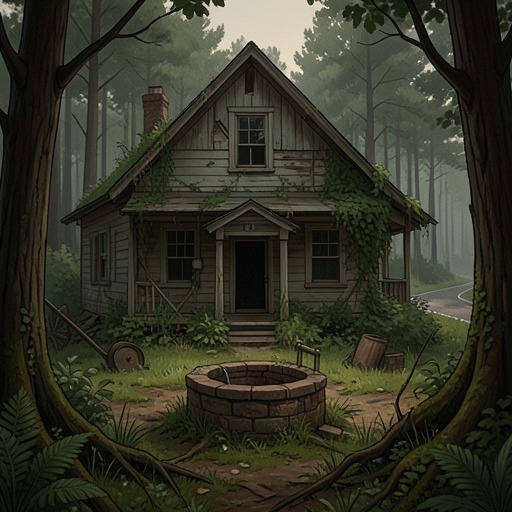
Tsuruta
The Wind-Up Bird ChronicleTsuruta is Toru Okada’s maternal uncle, a successful businessman who gives Okada and Kumiko a place to live and, later, advice when Okada feels cut off from ordinary reality. His importance lies less in directing events than in offering a practical home and a counterweight to haste: he makes room for Okada to wait, look carefully, and decide what matters.
Family and character
Tsuruta is the younger brother of Okada’s mother. Okada describes him as cool and almost uncanny in the way he leaves other people alone, yet identifies him as his favorite relative. This reserve is not indifference in practice: Tsuruta does not impose demands on the couple, and when Okada later calls with difficult news, he asks to visit and see the situation for himself.
His independent career helps explain the impression he makes on Okada. Tsuruta trained at a college in Tokyo and worked as a radio announcer for ten years before becoming tired of the job and quitting. He then opened a small, austere bar in Ginza. Its reputation for authentic cocktails helped him build a successful group of bars and restaurants. When Okada once asked why his ventures succeeded, Tsuruta showed him his palms and attributed it to a “magic touch,” without explaining further. The answer is characteristic: lightly delivered, self-contained, and resistant to turning experience into a lesson on demand.
The house and the young couple
Tsuruta’s practical generosity changes the material circumstances of Okada and Kumiko’s marriage. In the autumn of their second year together, they had to leave their Koenji apartment because it was scheduled for renovation. They were looking for a cheap, convenient replacement on a limited budget when Tsuruta offered them his house in Setagaya for nominal rent. He had bought it when he was thirty-five and lived there alone until he married at forty-two; by the time the couple needed it, he was living elsewhere.
The arrangement suited both sides. Tsuruta had hoped eventually to tear down the old house and replace it with a more functional building, but architectural regulations prevented the plans he wanted. He was waiting for a possible relaxation of the rules and did not want the risks of renting to strangers while the property remained in limbo. Okada and Kumiko, meanwhile, accepted that they would have to leave on three months’ notice when the time came. The house stood a considerable distance from the nearest Odakyu Line station, but its quiet residential setting and small yard made it feel to them like a real household, even though it was not their property.
That feeling of home was therefore both genuine and conditional. Tsuruta gave the couple stability at a time when an affordable apartment was difficult to find, but the understanding that they might have to move remained part of the gift. His provision of shelter does not solve the uncertainties in their marriage; it gives them a place in which to live while those uncertainties develop.
A source of local knowledge
When Okada begins asking whether the neighborhood and its houses conceal a troubling history, Tsuruta distinguishes his own experience from what he has merely heard. Asked whether anything bad happened to him in the Setagaya house, he says he lived there for seven years and recalls no problem. He also tells Okada that the Miyawaki property nearby is another matter, while emphasizing that the two houses are some distance apart. His answer offers reassurance about his own former home without denying the local reputation of the neighboring property.
Tsuruta cannot account for everyone who occupied the house after he left. A high-school teacher and family lived there for three years, followed by a young couple for five. Because a real-estate agent handled the tenancy, Tsuruta never met them and does not know why they moved out; he has heard of no misfortune involving them. Rather than convert that absence of knowledge into certainty, he points Okada toward someone better placed to know the history: Mr. Ichikawa, the long-established local real-estate agent at Setagaya Dai-ichi Realtors, across from the station. Tsuruta says that Ichikawa told him about the Miyawaki house and may be willing to talk. His contribution here is not a revelation but a useful referral, a recognition of where his own knowledge ends.
Counsel during Okada’s crisis
After Kumiko has left, Okada tells Tsuruta that he may move out within weeks. He explains that Kumiko has written to say she will not return and that he wants to get away from the house, though he cannot say for how long. Tsuruta responds by asking to visit and see for himself what is happening. When he comes two evenings later, he looks at the mark on Okada’s face but does not pretend to understand it. Instead, he tells Okada to think hard about what is most important to him.
Okada answers that the issues are tangled together and he cannot separate them into one thing to address at a time. Tsuruta’s reply is a method of attention rather than a ready-made solution. He advises starting with simple things, allowing time to pass without rushing to a decision, and training oneself to see with one’s own eyes until something becomes clear. His example is deliberately ordinary: a person could stand on a street corner day after day and watch those who pass. Patient observation, in his account, is not wasted time. He calls spending plenty of time on something “the most sophisticated form of revenge,” but leaves the meaning of that remark unexplained when Okada asks whom the revenge would be against. Tsuruta smiles and says Okada will understand later.
The advice suits the limits of their relationship. Tsuruta does not claim to untangle Okada’s marriage or explain the uncanny events around him. He instead offers a way to endure uncertainty without letting it force an immediate answer. His emphasis on looking and waiting echoes the novel’s repeated attention to perception, memory, and the difficulty of distinguishing what a person knows from what remains obscure.
The house after Okada leaves
Tsuruta’s offer of shelter remains present even as the house changes in Okada’s imagination. After emerging from the well and returning to a neighborhood that feels altered, Okada calls his uncle rather than attempt to explain the events to him. He keeps the truth back, telling Tsuruta only that Kumiko is away on a short business trip. The concealment shows the distance between the strange experiences Okada is living through and the ordinary account he can offer another person.
Later, in winter, Okada returns down the alley to the site of the vacant Miyawaki house. The building and yard have been demolished and enclosed by a high plank fence. Looking through its gaps, he sees compacted earth, scattered weeds, and none of the well, trees, paving stones, antenna, or bird sculpture that had once marked the yard. He struggles to believe that he had descended into a well there at all. Tsuruta is not present in this scene, but the contrast reaches back to the house he had made available: domestic shelter and remembered places alike can be altered, emptied, or rendered difficult to trust. His role remains modest and consequential—a relative who provides a home, acknowledges the limits of what he knows, and urges Okada to let understanding arrive through sustained attention rather than force.